Most vendors believe RFP evaluation begins when proposals are submitted

It does not.
By the time evaluators open a proposal, six decisions have already been made. Most vendors lost on at least one of them.
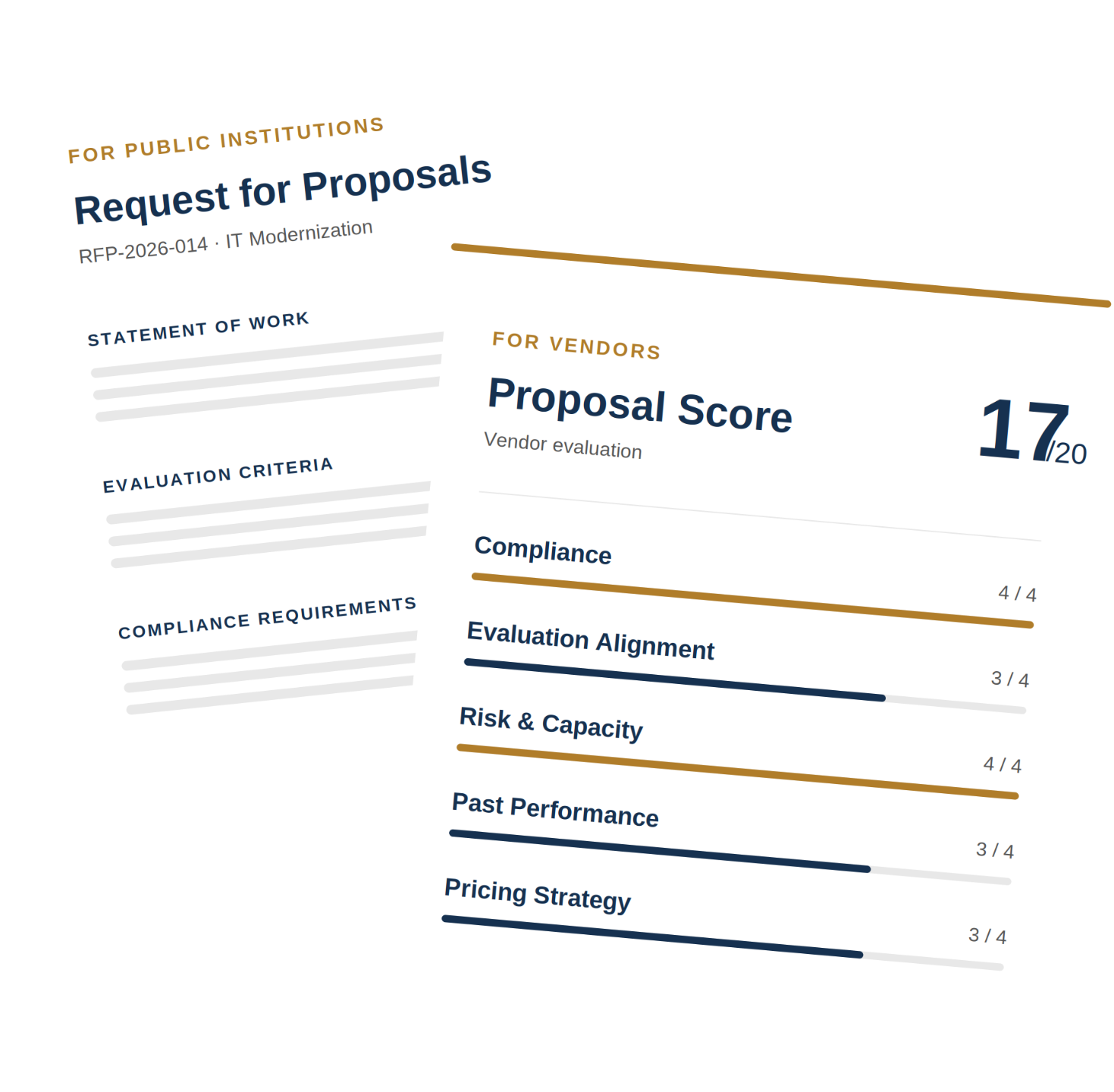
Rule one: Compliance is binary. One missed mandatory submission requirement disqualifies a proposal before technical review.
Rule two: Section M dictates everything. Equal effort across sections means misallocated effort relative to how points are awarded.
Rule three: Past performance is verified, not assumed. Stale references and unreachable contacts cost points that cannot be recovered.
Rule four: Pricing format compliance matters more than pricing strategy. The lowest bid in the wrong format loses to a higher bid that followed instructions.
Rule five: Small business and certification requirements are checked first. Guessing at compliance status costs contracts you were qualified to win.
Rule six: The procurement officer is not the evaluator. Optimizing for the buyer rather than the scoring committee misreads the room.
The question for every vendor competing on their next three RFPs:
How can vendors find and fix the six mistakes that lose government contracts — on their next three proposals — without weakening the parts that win them?
Three places to start:
→ The RFP Compliance Scorecard (free) — 20 questions, a tier-scored result, a remediation roadmap.
→ The Hidden Rules Training — every rule, with examples from real evaluations.
→ Done-for-You Proposal Management — full proposal lifecycle support for high-value RFPs where the cost of losing exceeds the cost of expert help.
The rules are not hidden because they are secret. They are hidden because no one teaches them.
Take the scorecard. Tell me which rule you scored lowest on. — Melody
Linton & Thelwell Advisory Group helps public institutions modernize procurement — and equips commercial vendors to win government contracts. Led by a former Chief Procurement Officer with 25+ years overseeing portfolios from $200M to $3B.