The Solicitation Is the Safeguard: Governing AI Through the Document You Already Control
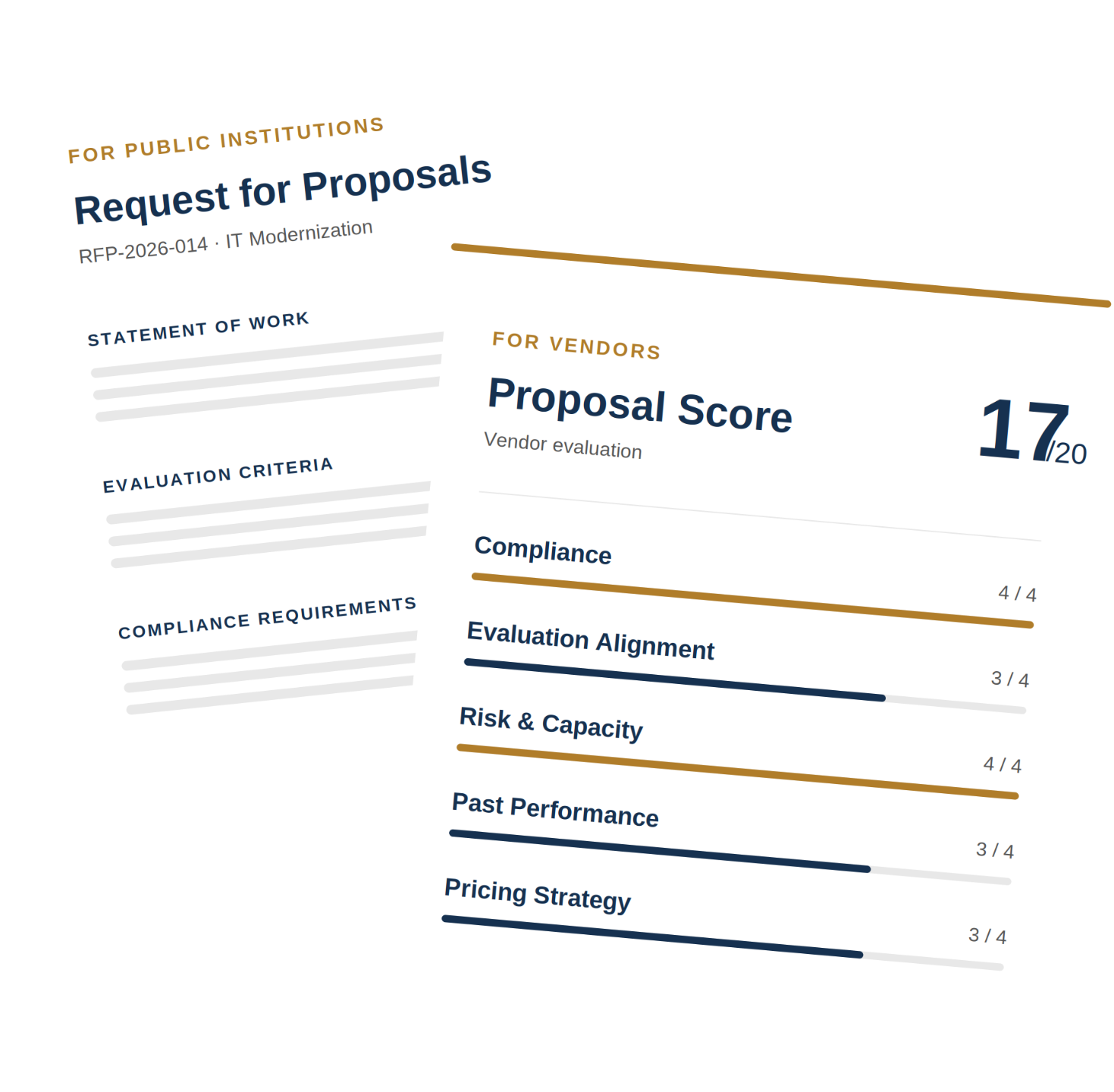
When people worry about artificial intelligence in government, they usually reach for big solutions — a new policy, a new office, a new law. Those things have their place. But while everyone waits for them, the most powerful tool for governing AI is already sitting on every procurement officer’s desk. It’s the solicitation: the document that says, before anyone gets paid, exactly what a vendor has to do, disclose, and promise.
Think about what a solicitation already does. It sets the requirements. It demands proof of capacity. It requires insurance, references, and signatures. It spells out what happens when something goes wrong. Every one of those is a form of governance — you’ve just never had to apply it to a product that teaches itself. AI doesn’t change the tool. It changes the questions you put inside it.
That’s good news for a short-staffed office, because it means you don’t have to become a data scientist or wait for the state to hand you a rulebook. You have to add a handful of expectations to documents you already write: tell us where AI is used, show us it was built and tested fairly, give us records we can review, and stand behind it in writing when it fails.
The vendors worth working with will answer plainly. The ones who can’t — who wave you off with “it’s proprietary” or “it just works” — have told you something important before you’ve spent a dollar. That’s the whole point of putting the safeguard in the solicitation: it moves the hard conversation to before the award, when you still have leverage, instead of after an incident, when you don’t.
None of this requires you to be against AI. Used well, these tools can genuinely help a lean office do more. The goal isn’t to keep AI out. It’s to make sure that when it comes in, it comes in on your terms — written down, agreed to, and on the record.
Schedule a 45-minute consultation →
FAQ
Why is the solicitation a good place to govern AI?
Because it already sets requirements, demands proof, and defines consequences before a vendor is paid — the exact leverage points you need, applied to a new kind of product.
Do agencies need a new law to start?
No. You can add AI expectations to the documents you already write today, and strengthen them as formal standards and state laws catch up.
Linton & Thelwell Advisory Group helps public institutions modernize procurement — and equips commercial vendors to win government contracts. Led by a former Chief Procurement Officer with 25+ years overseeing portfolios from $200M to $3B.